

Careful cleaning around Jacksonville pools
Pool Deck and Screen Enclosure Cleaning Jacksonville FL
A surface-specific cleaning plan for lanais, pool cages, mesh screens, frames, patios, pavers, and suitable deck finishes. We account for pool water, drains, furniture, landscaping, electrical fixtures, loose screens, oxidation, and slippery organic buildup before work begins.
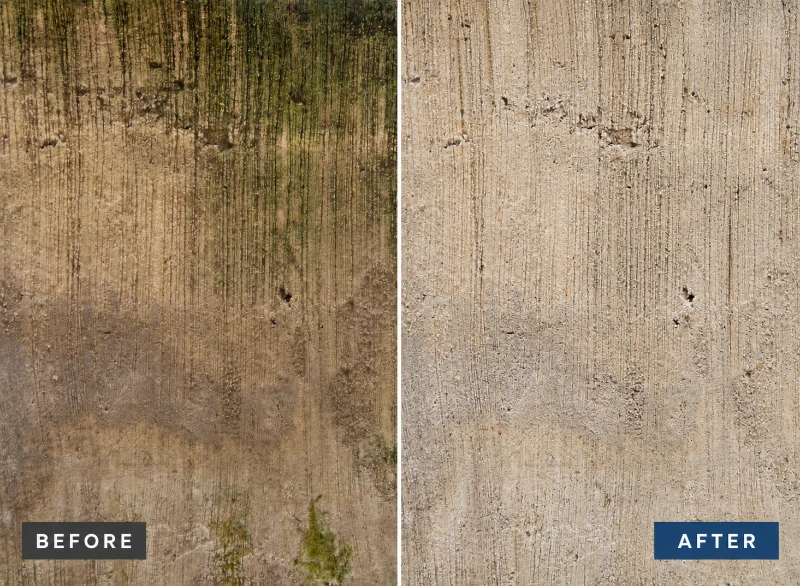
A pool area is a collection of surfaces Adjacent surfaces may require a different approach, so review our guidance on paver cleaning, house washing and property protection and safety.
What is included in pool deck and screen enclosure cleaning?
The written scope can cover the agreed pool deck, lanai floor, screen-enclosure frame, mesh panels, accessible cage members, patio walls, or nearby paved areas. These surfaces are not cleaned with one universal pressure setting.
Jacksonville pool areas may combine concrete pavers, travertine, textured coatings, painted concrete, brick, natural stone, aluminum framing, spline-held mesh, acrylic panels, drains, coping, and delicate fixtures. Existing oxidation, chalking, failed sealer, loose screens, torn mesh, corrosion, cracks, and coating wear determine what is suitable.
Common pool-area problems
- Green or black organic film in shaded deck areas
- Slippery residue near drains and furniture
- Pollen, cobwebs, insect residue, and leaf debris
- Oak tannins on pavers or concrete
- Oxidation or chalking on aluminum frames
- Loose spline, brittle mesh, or torn screens
- Rust from furniture, irrigation, or metal fixtures
- Cloudy sealer, joint-sand loss, or coating wear
Choose the method by surface
How pool deck materials affect cleaning
| Surface | Typical concern | What we check first |
|---|---|---|
| Poured concrete | Organic film, tannins, traffic soil | Age, cracks, scaling, paint, texture, drainage |
| Concrete or brick pavers | Dark joints, weeds, loose sand, sealer haze | Joint stability, coating, settlement, coping, runoff |
| Travertine or natural stone | Porosity, discoloration, sensitive finish | Stone identity, filler, sealer, test area, chemistry |
| Painted or textured coating | Chalking, lifting, worn color | Adhesion, repairs, age, test area, manufacturer guidance |
| Aluminum pool cage | Oxidation, organic film, corrosion | Finish condition, fasteners, screen attachment, access |
| Mesh screening | Pollen, webbing, algae-like film | Tears, brittleness, loose spline, safe rinse direction |
Protect the pool environment
Can a pool deck be cleaned without affecting the pool?
The plan should minimize debris and treatment entering the water, but no responsible cleaner should ignore the pool’s proximity. Wind, deck slope, coping, channel drains, overflow systems, screen layout, and furniture placement all affect where rinse water travels.
Pool chemistry and equipment operation remain the owner or pool professional’s responsibility. Tell us about recently balanced water, salt systems, heaters, automation, open equipment panels, leaks, or service scheduled near the cleaning date. Pool water should not be used as a convenient disposal point.
Before the appointment
- Remove towels, toys, floats, cushions, and small décor.
- Close doors and windows leading into the home.
- Secure pets and keep swimmers out of the work area.
- Identify outlets, speakers, cameras, lights, and controls.
- Point out loose screens, tears, corrosion, cracked coping, or failed coatings.
- Tell us about sensitive plants and any areas that must remain dry.
Our pool-area process
How we clean decks and screen enclosures
Define every surface
We identify deck material, enclosure finish, screens, coatings, drains, pool edges, fixtures, and requested areas.
Document condition
Cracks, loose joints, oxidation, corrosion, torn mesh, failing paint, sealer, and permanent stains are noted.
Plan access and runoff
Furniture, doors, pool water, landscaping, equipment, neighbors, wind, drains, and hose routes are considered.
Prepare the area
Loose items are moved, sensitive components are identified, and people and pets stay clear of treatment zones.
Clean by material
Decks, frames, and screens receive controlled methods rather than the same pressure and chemistry everywhere.
Detail edges and joints
Reachable corners, drains, enclosure bases, and transitions receive attention within the written scope.
Rinse thoughtfully
Residue is directed with the pool, doors, plants, drains, and surrounding property in view.
Final review
We identify any remaining oxidation, stains, coating failure, screen damage, or repair needs.
Jacksonville pool-area exposure
Why shaded lanais and pool cages darken
Warm weather, summer rain, high humidity, screened shade, landscaping, and airborne pollen create recurring buildup around Jacksonville pools. Mature oak canopy in Mandarin, San Marco, Riverside, Avondale, and Arlington can add leaf litter and tannins. Intracoastal and Beaches properties may also collect salt residue and windblown sand.
Covered corners, north-facing enclosure edges, low deck areas, clogged channel drains, irrigation overspray, and furniture that rarely moves often darken first. Correcting drainage and reducing constant moisture helps cleaning last longer.
Water and storm-drain notice
Cleaning residue, debris, oil, and chemicals should not be intentionally directed into Jacksonville storm drains or the pool. Current St. Johns River Water Management District Phase III Extreme Water Shortage guidance also includes added pressure-washing restrictions affecting portions of Duval County.
Reviewed September 12, 2026. We check the property location and current rule before scheduling.
Realistic limitations
Cleaning improves buildup, not material failure
Screens and frames
Cleaning cannot repair torn mesh, loose spline, bent framing, corrosion, oxidation, or failing paint.
Deck surfaces
Cracks, settlement, spalling, failed coatings, loose pavers, and missing joint sand require separate work.
Permanent stains
Rust, fertilizer burns, deeply absorbed oil, paint, and prior chemical damage may remain after treatment.
Pool-area questions
Pool deck and screen enclosure cleaning FAQs
Can pressure washing damage a pool screen?
Yes. Excessive pressure, a close nozzle, or the wrong angle can tear brittle mesh or dislodge spline. Screen age and condition should be reviewed first.
Will cleaning remove oxidation from aluminum frames?
Routine washing removes surface soil but does not restore oxidized paint. Oxidation treatment is separate and can reveal uneven color or coating wear.
Can paver joint sand wash into the pool?
Loose sand can move during cleaning. Joint condition, rinse direction, coping, drains, and pool protection should be considered, and resanding must be separately scoped.
Will pool-deck cleaning remove slippery buildup?
Suitable organic surface film often improves, but worn texture, sealer, drainage, leaks, and recurring moisture can continue to affect traction.
Do I need to cover the pool?
That depends on the pool, cover system, deck slope, wind, and approved cleaning plan. Do not install an improvised cover that could create another hazard; discuss it during the estimate.
Can you clean travertine around a pool?
Travertine and other natural stone require material identification, compatible chemistry, controlled pressure, and review of filler and sealer condition.
Are screen roofs included?
Only when the written scope includes accessible overhead cage and screen areas. Height, condition, equipment access, and safe reach affect what can be quoted.
How much does pool-deck cleaning cost?
Area, material, coating, screen-cage size, height, furniture, buildup, stains, access, drains, and pool protection shape the price.
How often should a Jacksonville pool area be cleaned?
Use visible condition, traction, and manufacturer guidance. Shade, trees, irrigation, use, drainage, and coastal exposure determine recurrence.
Can work proceed during water restrictions?
Only when current rules permit it. The applicable district guidance and property location must be checked before scheduling.
Request a pool-area estimate
List the deck, enclosure, and every surface you want cleaned
Share the address, deck material, enclosure size, stories or height, coating or sealer history, screen condition, drains, furniture, and any photos available for follow-up review.