

Paver care built around the material
Paver Cleaning Jacksonville FL
Cleaning for driveways, walkways, patios, pool decks, and entries with attention to joint sand, drainage, weeds, efflorescence, stains, and existing sealer. Cleaning, resanding, and sealing are related services, but they are not the same scope.
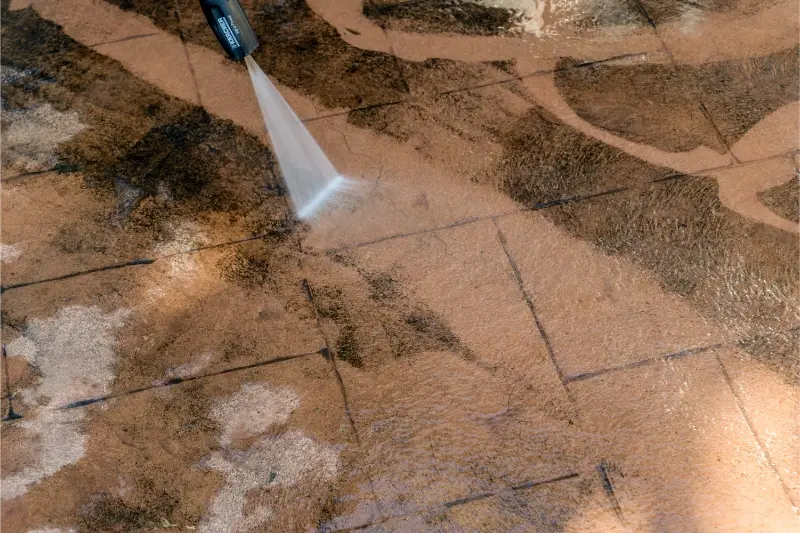
Know what is under the dirt For connected hardscape areas, compare our driveway and concrete cleaning, pool deck cleaning and specialty stain removal information.
What does paver cleaning include?
A standard paver-cleaning scope can include an agreed driveway, walkway, patio, entry, pool deck, or other accessible paved area. The plan depends on whether the units are concrete pavers, clay brick, natural stone, travertine, or another product, and whether a coating or sealer is present.
Routine washing can improve organic film, surface soil, leaf residue, and some traffic marks. Rust, oil, fertilizer burns, paint, efflorescence, sealer haze, and deeply absorbed stains require separate diagnosis. Loose units, low areas, eroded joints, and drainage problems are installation or repair issues rather than cleaning problems.
Common Jacksonville paver concerns
- Green or black organic buildup in shaded joints
- Weeds growing where joints have lost sand
- Oak-leaf and acorn tannin staining
- Orange irrigation or fertilizer-related marks
- Oil drips, tire transfer, and driveway traffic lanes
- White mineral haze or efflorescence
- Cloudy, peeling, uneven, or darkened sealer
- Low spots that stay wet after heavy rain
Cleaning is only one part of paver care
Cleaning, resanding, and sealing explained
| Service | What it addresses | What it does not do |
|---|---|---|
| Paver cleaning | Removes suitable surface buildup and prepares the area for evaluation | Does not replace missing sand, repair settling, or guarantee stain removal |
| Joint resanding | Replenishes compatible sand in suitable, dry, stable joints | Does not rebuild a failed base or permanently stop every weed or ant |
| Sealing | Adds a product-specific finish or protection after preparation and drying | Does not correct trapped moisture, failed prior sealer, drainage, or structural movement |
| Specialty stain treatment | Targets rust, oil, tannins, or mineral deposits after testing | Does not guarantee complete removal or restore damaged color |
| Paver repair | Addresses settlement, edging, broken units, or base failure | Is not included in routine cleaning unless separately agreed |
Existing sealer changes everything
Can sealed pavers be pressure washed?
Sometimes, but the sealer must be identified and its condition reviewed. High pressure, incompatible chemistry, or uneven technique can expose color differences, lift failing material, or make an already cloudy finish look worse. A test area may be appropriate.
If sealer is peeling, whitening, flaking, tacky, or trapping moisture, routine cleaning is not the same as stripping. Sealer removal can be a specialized restoration process with different chemicals, containment, drying, and result limitations.
Tell us before quoting
- When the pavers were installed
- Whether they were previously sealed
- Product name, if known
- Date of the last cleaning or sealing
- Whether sand is loose or missing
- Areas that stay wet or drain poorly
- Known oil, rust, fertilizer, or chemical spills
- Plans to resand or reseal after cleaning
Our paver cleaning process
How we approach Jacksonville pavers
Identify the material
We review paver type, joint condition, age, coatings, repairs, drainage, and surrounding surfaces.
Identify the problem
Organic buildup, tannins, oil, rust, paint, efflorescence, and sealer failure require different expectations.
Define the scope
Cleaning areas, specialty treatment, sand, sealing, exclusions, access, and water conditions are stated separately.
Prepare the area
Vehicles, furniture, planters, pets, loose debris, doors, pool water, plants, and drains are considered.
Clean consistently
Equipment, pressure, treatment, dwell time, and passes are adjusted to the material and surface condition.
Rinse and manage residue
Edges, joints, adjacent walls, landscaping, and drainage paths are reviewed during rinsing.
Inspect after cleaning
Remaining stains, exposed wear, joint-sand loss, and failed coatings become easier to evaluate.
Plan optional next steps
Resanding, drying, sealing, or repairs are discussed only when suitable and separately scoped.
Local paver conditions
Why Jacksonville pavers need condition-based maintenance
Summer rain, humidity, shaded courtyards, tree litter, irrigation overspray, and low drainage areas can make joints darken quickly. Established neighborhoods such as Riverside, Avondale, San Marco, Mandarin, and Arlington often have mature canopy and tannin-producing debris. Southside, Baymeadows, Bartram Park, Intracoastal communities, and the Beaches often feature larger paver driveways, detailed entries, or paved pool areas.
Coastal air and windblown sand can add film and abrasion, while frequent irrigation can leave orange mineral staining. Correcting drainage, sprinkler direction, vehicle leaks, and joint loss helps reduce rapid recurrence after cleaning.
Water and runoff notice
Jacksonville storm drains connect to local waterways, so debris, oil, sediment, and cleaning residue should not be intentionally discharged into them. The St. Johns River Water Management District currently lists Phase III Extreme Water Shortage restrictions affecting portions of Duval County, including added pressure-washing restrictions.
Reviewed September 12, 2026. Current rules and the property location must be checked before scheduling.
What cleaning cannot repair
Set the right expectation before equipment arrives
Settling and movement
Low areas, rocking units, broken edges, and spreading borders require repair or installation work.
Failed coatings
Cloudy or peeling sealer may need specialist removal. Washing alone may expose more variation.
Permanent discoloration
Acid, fertilizer, rust, oil, and sun variation can remain after appropriate treatment.
Paver questions
Paver cleaning Jacksonville FAQs
Does paver cleaning remove joint sand?
Some loose sand movement is possible, especially where joints are already low or unstable. The estimate should state whether resanding is included.
Should pavers be resealed after cleaning?
Not automatically. Material, previous sealer, moisture, drainage, desired appearance, and manufacturer guidance should be reviewed before deciding.
Can pressure washing damage pavers?
Excessive pressure can etch surfaces, disturb joints, expose aggregate, or damage coatings. Material and condition guide the method.
Will cleaning remove weeds permanently?
Cleaning can remove visible growth, but seeds, roots, moisture, joint loss, and surrounding vegetation allow recurrence. Sand and maintenance affect future growth.
Can you remove white haze from pavers?
White haze may be efflorescence, trapped moisture, mineral deposits, or failed sealer. Each requires diagnosis; routine washing may not solve it.
Can oil stains be removed?
Fresh residue may improve with degreasing, while absorbed oil can remain visible. Results depend on age, depth, material, and prior coatings.
How long must pavers dry before sealing?
Drying time depends on material, weather, shade, humidity, joint moisture, product instructions, and recent rain. A fixed universal number is unreliable.
Is polymeric sand always required?
No. Joint width, paver system, drainage, product requirements, and intended use determine whether a particular sand is appropriate.
How much does paver cleaning cost in Jacksonville?
Area, material, buildup, stains, sealer, joint condition, access, drainage, furniture, and optional sanding or sealing shape the price.
How often should pavers be cleaned?
Clean according to visible condition, traction, material guidance, and exposure. Shade, irrigation, traffic, trees, and drainage change the interval.
Request a paver estimate
Tell us about the material, joints, stains, and sealer
Share the property address, areas, installation age if known, prior sealing, drainage concerns, and photos that can be reviewed during follow-up.