

Flatwork cleaning for Northeast Florida
Driveway and Concrete Cleaning Jacksonville FL
Remove the dark traffic lanes, organic buildup, leaf marks, surface dirt, and curbside grime that make otherwise sound concrete look tired. Every estimate starts with the surface condition and the type of stain, because not every mark responds to pressure alone.
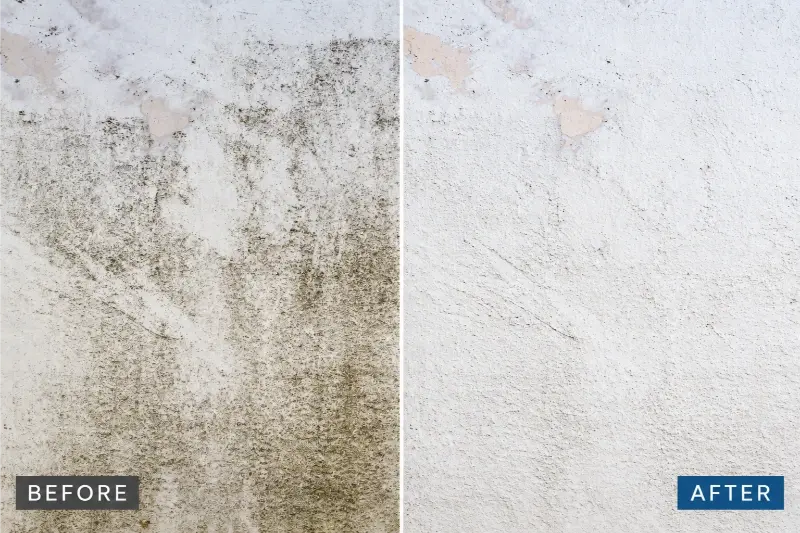
Clean flatwork, clearly scoped Properties with jointed paving or specialty stains may also need paver cleaning or rust and oil stain treatment; our cost guide explains the factors that affect a written estimate.
What is included in driveway and concrete cleaning?
A standard service can cover the agreed driveway, front walk, entry pad, sidewalk, curb section, patio, or other accessible flatwork. We identify whether the surface is poured concrete, concrete pavers, brick pavers, painted concrete, exposed aggregate, or a coated area before choosing equipment and chemistry.
Jacksonville driveways collect more than ordinary dirt. Oak leaves leave tannins. Irrigation can create orange mineral stains. Shade and summer humidity encourage green or black organic buildup. Vehicles leave tire transfer, drips, and traffic lanes. Near busy roads, fine grit and exhaust film settle along the apron and curb.
Areas we can evaluate
- Poured concrete driveways and walkways
- Concrete or brick paver driveways
- Sidewalks, aprons, curbs, and entry pads
- Patios and accessible backyard flatwork
- Pool deck surfaces after material review
- Commercial sidewalks and storefront approaches
- Targeted rust, oil, gum, or tannin treatment
Specialty stains, sealing, joint sanding, paint removal, and repairs are separate unless written into the estimate.
The stain determines the strategy
What can pressure washing remove from a driveway?
| Problem | Likely approach | Expectation |
|---|---|---|
| Organic growth and general soil | Pre-treatment when appropriate, controlled surface cleaning, rinse | Often responds well on sound concrete |
| Leaf and acorn tannins | Material-compatible spot treatment may be needed | Fresh marks may improve more than deeply set stains |
| Oil and grease | Degreasing treatment and agitation as appropriate | May lighten; deep absorbed oil may remain |
| Orange irrigation or rust | Specialty treatment after a test | Not included in a basic wash; full removal is not guaranteed |
| Tire marks | Targeted cleaner plus surface cleaning | Rubber transfer may improve; coating damage will not |
| Paint, battery acid, fertilizer burns | Case-by-case assessment | May be permanent or require restoration, not cleaning |
Know the material
Concrete, pavers, and coated surfaces are not interchangeable
Poured concrete is durable, but young, weak, etched, spalled, cracked, or previously damaged concrete can be scarred by aggressive pressure. Cure age and condition matter.
Pavers have joints that can lose sand during cleaning. Loose units, weeds, efflorescence, sealer haze, joint stability, and drainage should be reviewed. Cleaning does not automatically include resanding or sealing.
Painted, stained, sealed, or coated concrete needs a test and reduced-aggression plan. A failing coating can lift during cleaning, and hidden color variation may appear once surface dirt is gone.
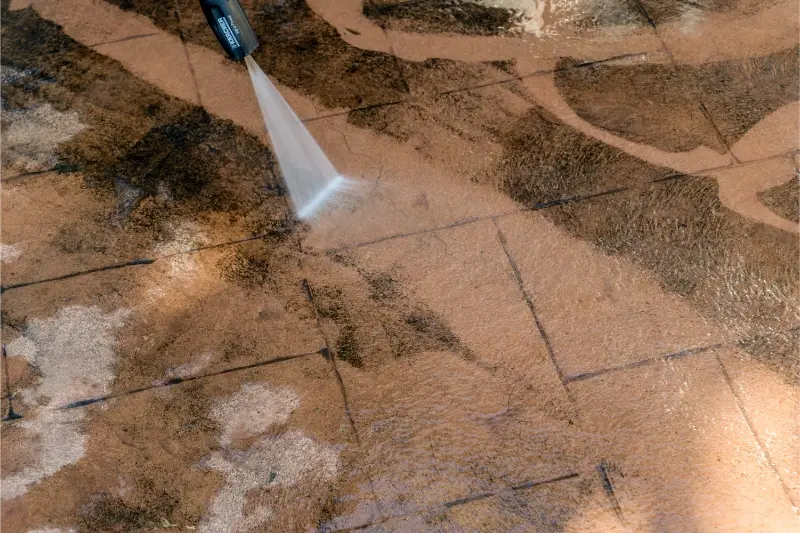
Our flatwork process
How we clean Jacksonville driveways and concrete
Inspect
We identify material, stains, drainage, nearby doors, vehicles, plants, cracks, scaling, repairs, coatings, and joint condition.
Set expectations
The quote defines included areas, specialty treatments, limitations, water access, and any sections that should not be cleaned.
Prepare
Loose items and vehicles are cleared. Debris is removed and runoff paths are reviewed before equipment starts.
Treat and clean
Where appropriate, we apply a surface-compatible treatment, then use controlled equipment and consistent passes.
Edge and rinse
Edges, corners, and transitions receive detail work. Soil and residue are rinsed away from doors and managed with drainage in mind.
Review
We inspect the dried or drying surface, identify permanent marks, and confirm the written scope is complete.
Local conditions
Why Jacksonville concrete darkens so quickly
Warm temperatures, regular rainfall, tree cover, and shaded drainage edges let organic film return. In Riverside, Avondale, San Marco, Mandarin, and older parts of Arlington, mature oaks can leave heavy leaf litter and tannin marks. Southside, Bartram Park, Baymeadows, and newer communities often have long driveways, paver sections, or decorative entries. Closer to the Beaches and Intracoastal, windblown sand and salty residue add abrasion and film.
Low spots that stay wet, sprinkler heads aimed across the slab, roof runoff without good drainage, and constant parking patterns often explain why one strip looks worse than the rest. Cleaning improves appearance; correcting the water or vehicle source helps the result last.
Runoff and storm drains matter
Jacksonville’s stormwater system carries runoff through ditches and drains. Wash water, debris, chemicals, oil, and sediment should not be intentionally discharged into storm drains. We plan the workflow around the property, contamination present, and applicable requirements.
Current water-use notice
The St. Johns River Water Management District currently lists Phase III Extreme Water Shortage restrictions affecting portions of Duval County, including added restrictions related to pressure washing. Scheduling depends on the rule that applies at the property.
Local conditions reviewed September 12, 2026. Restrictions can change.
Prepare for better results
Before the driveway cleaning appointment
Clear the surface
Move vehicles, bins, toys, mats, planters, hoses, and fragile décor. Keep garage doors and nearby windows closed.
Flag concerns
Show us fresh concrete, loose pavers, failing sealer, repaired cracks, drainage problems, irrigation stains, or known oil spills.
Plan access
Unlock gates, secure pets, disable sprinklers during the work window, and keep people away from wet treatment areas.
Pricing without vague promises
What affects concrete cleaning cost?
Price is shaped by measured area, material, buildup, stain type, access, slope, drainage, obstacles, edge work, water availability, and requested specialty treatment. A small oil-stained pad can require more treatment time than a larger lightly soiled driveway.
Send wide photos, close-ups of stains, and the property address. If the surface is painted, sealed, new, cracked, or previously repaired, include that detail so the estimate reflects the real job.
What standard cleaning does not fix
- Cracks, spalling, scaling, or erosion
- Permanent acid or fertilizer burns
- Uneven color from old repairs
- Failed paint, stain, or sealer
- Deep oil that has migrated through concrete
- Drainage, irrigation, or vehicle leaks
- Paver leveling or structural movement
Straight answers
Driveway and concrete cleaning FAQs
How much does driveway pressure washing cost in Jacksonville?
There is no reliable one-price answer without the size and condition. Surface type, stain treatment, access, drainage, obstacles, and included sidewalks or curbs all change the scope. Photos and an address help us quote accurately.
Will pressure washing remove oil stains?
Fresh surface oil may improve with prompt degreasing. Older oil can soak deeply into porous concrete and may only lighten. We set expectations after seeing the stain.
Can pressure washing damage concrete?
Yes, aggressive pressure or poor technique can etch weak, young, or damaged concrete. We inspect age and condition, use controlled equipment, and avoid promising that every slab is a cleaning candidate.
Why are there lines after a driveway is washed?
Lines can come from inconsistent wand distance, uneven surface-cleaner passes, excessive pressure, or existing color differences. Consistent overlap and an appropriate final rinse reduce operator-created striping.
How long before I can park on the driveway?
That depends on whether the service was cleaning only or included a treatment, sand, coating, or sealer. For cleaning-only work, allow the surface to drain and dry and follow the instructions given at the walkthrough.
Does paver cleaning include new joint sand?
Not automatically. Cleaning can displace loose joint sand. Resanding and sealing are separate scopes that should be discussed before work.
Can you remove rust from sprinkler water?
A specialty treatment may improve iron staining, but it is separate from standard cleaning and requires a surface test. Correcting the sprinkler overspray helps prevent quick recurrence.
Should I seal concrete after cleaning?
Sealing is optional and surface-specific. Concrete must be suitable, properly prepared, and sufficiently dry, and the product must match the desired finish and conditions. Cleaning alone does not obligate you to seal.
How often should a Jacksonville driveway be cleaned?
Clean when traction or appearance warrants it rather than following a fixed calendar. Shade, tree litter, drainage, irrigation, vehicle leaks, and coastal exposure determine how quickly buildup returns.
Can work be done during current water restrictions?
Only when the applicable rule permits the work. Restrictions can vary by location and declaration, so we verify the current requirements before scheduling.
Request a flatwork quote
Show us the surface and the stains
Send the property address, approximate areas, material, and access notes. If you have wide photos or close-ups of oil, rust, paint, sealer failure, cracks, or paver joints, mention them in the message so we can arrange to review them during follow-up.