

Pressure Washing Jacksonville FL
Jacksonville weather leaves its mark. Shade, pollen, leaf tannins, irrigation runoff, salt exposure and organic buildup can make siding, roofs, driveways, pavers and commercial entrances look worn before their time.
We help property owners understand what needs cleaning, which method fits the surface and what results are realistic before work begins.
Professional Exterior Cleaning for Jacksonville Homes & Businesses
A dark driveway, streaked roof or stained wall is not one simple problem. Concrete, pavers, stucco, painted siding, screens and roofing materials react differently to pressure and cleaning solutions. For detailed service information, compare our house washing, roof cleaning and driveway and concrete cleaning options.
That is why a responsible exterior cleaning plan starts with the surface, the source of the staining and the condition already present. Loose paint, oxidation, cracked stucco, failed paver sealer, open joints and deteriorated roofing can change what is safe.
Durable flatwork may suit controlled pressure. Siding, stucco, roofs and delicate finishes often need a lower pressure approach. The correct choice depends on the material and its condition.
- Surface assessment
- Stain identification
- Plant and fixture planning
- Drainage awareness
- Written scope
- Honest limitations
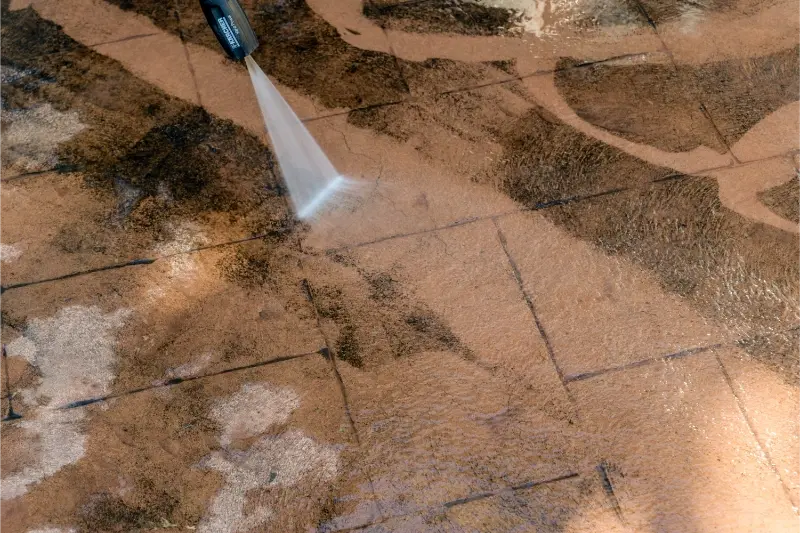
Pressure Washing Services for Jacksonville Properties
Choose the area that needs attention. Final recommendations depend on the surface, access, staining and current water use rules.
House Washing
Exterior cleaning for suitable siding, trim, soffits and stucco, with attention to oxidation, paint condition, windows and landscaping.
View house washing →Roof Cleaning
A condition led approach for asphalt shingles, tile and other roof materials. Aggressive pressure is not automatically used on roofing.
View roof cleaning →Driveway and Concrete Cleaning
Cleaning for driveways, sidewalks, curbs and other suitable flatwork affected by soil, organic growth, tire marks and surface residue.
View driveway cleaning →Paver Cleaning
Assessment of pavers, joint sand, weeds, staining and existing sealer before cleaning or discussing any separate sealing work. Compare paver sealing preparation and finish options before deciding.
View paver cleaning →Pool Decks and Screen Enclosures
Careful cleaning around lanais, pool cages, screens, drains, furniture, landscaping and different deck materials.
View pool deck and screen cleaning →Commercial Pressure Washing
Exterior cleaning for multifamily properties, HOA common areas, storefronts, sidewalks, buildings and other managed sites. Buyers can also prepare a site-specific commercial proposal request.
View commercial scope →Pressure Washing Versus Soft Washing
Neither method is best for every job. The safest useful method is the one that matches the material and the condition. Our Jacksonville soft-washing guide explains when lower mechanical force may be appropriate. Property owners can compare the methods in pressure washing versus soft washing, weigh professional versus DIY cleaning, and use our pre-hire questions before requesting a scope.
Controlled Pressure Cleaning
Often considered for sound, durable surfaces after inspection.
- Concrete driveways and sidewalks
- Some brick and masonry
- Some unsealed paver surfaces
- Suitable commercial flatwork
Lower Pressure Exterior Cleaning
Often considered where aggressive pressure could damage a finish or force water where it should not go.
- Painted or vinyl siding
- Stucco and fiber cement
- Roofing materials
- Screens and delicate finishes
Before and After Pressure Washing Results
Judge exterior cleaning by visible work, not generic promises. These project images show the kind of improvement proper surface cleaning can deliver.
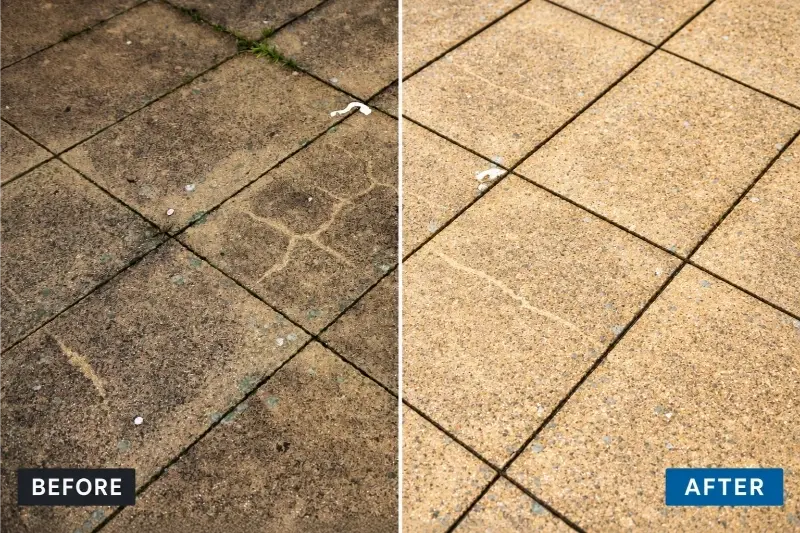
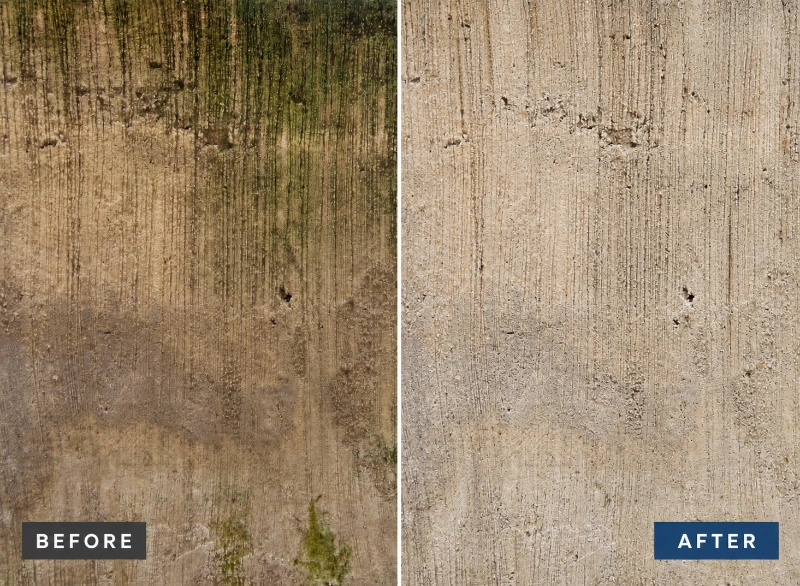
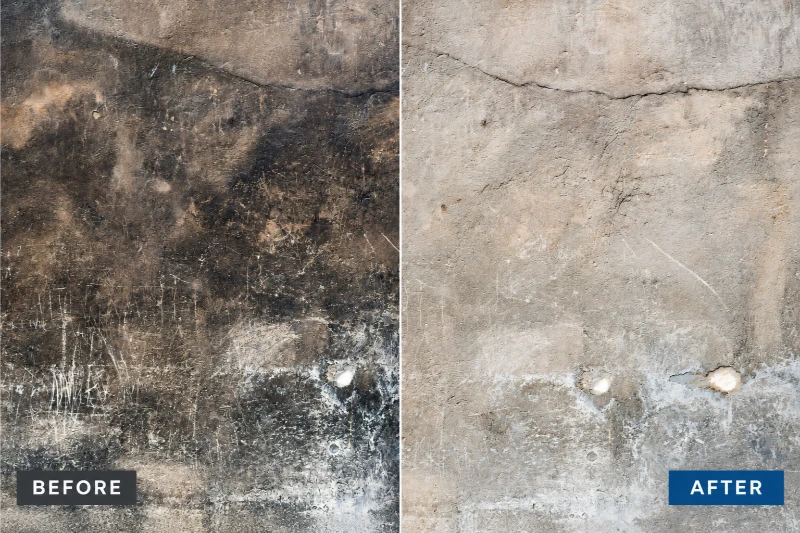
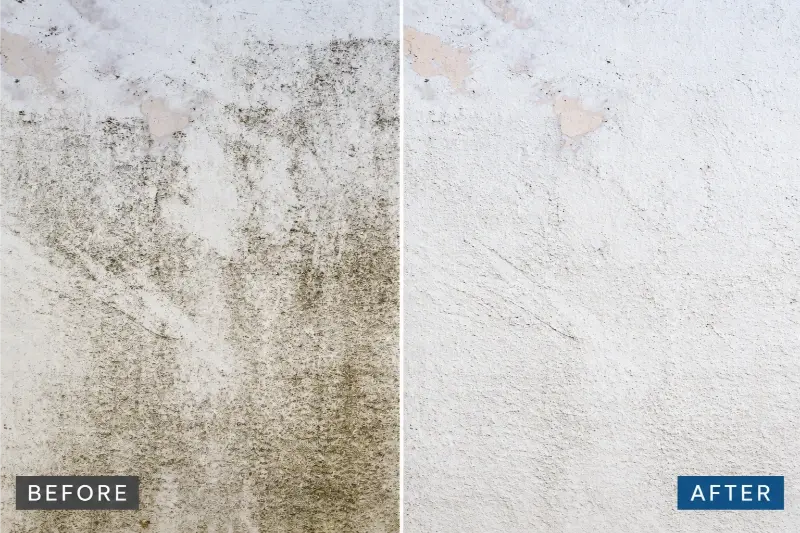
Project locations and job details are published only when they can be independently verified.
Why Jacksonville Exteriors Need a Local Cleaning Plan
Properties near the Atlantic coast or Intracoastal Waterway may encounter wind driven salt residue and sand. Tree shaded lots can collect pollen, leaves, tannins and organic buildup. Irrigation can leave iron staining on walls, curbs and concrete.
From Riverside and Avondale near the St. Johns River to San Marco, Mandarin, Arlington, Southside, Baymeadows, Intracoastal West and Oceanway, exposure can vary from one property to the next.
The cleaning plan should consider the surface, shade, landscaping, nearby water, storm drains and where loosened material may travel.
Our Exterior Cleaning Process
Tell Us About the Property
Share the address, surfaces, main concerns and clear photos of the affected areas.
Review the Surface
We consider material, staining, access, drainage and visible conditions before defining the work.
Receive a Written Scope
The estimate should state what is included, the price, exclusions and any optional treatments.
Prepare and Protect
Access, gates, pets, plants, windows, fixtures, vehicles and nearby drains are considered before cleaning.
Use the Right Method
The cleaning approach is adjusted to the surface instead of treating every material like concrete.
Rinse and Inspect
The agreed work area is rinsed and checked for remaining stains or permanent surface conditions.
Final Walkthrough
Results and any limitations are reviewed with the customer when access and scheduling allow.
Plan Future Care
Maintenance advice is based on exposure and condition, not an arbitrary cleaning calendar.
What Jacksonville’s Climate Does to Exterior Surfaces
Most of the staining on Jacksonville properties comes from three sources: organic growth, iron and tannin runoff, and airborne pollen and dust that sets into porous surfaces during dry stretches.
Algae, Mold, and Mildew
Jacksonville’s summer combination of heat, rain, and shade creates near-ideal conditions for algae and mildew on north-facing siding, roof shingles, and pavers. Roof algae — the dark streaking visible on asphalt shingles — is typically Gloeocapsa magma, a cyanobacteria that holds moisture against the shingle and accelerates granule loss. It spreads roof to roof via wind and birds, which is why multiple homes in the same neighborhood often show it at the same time. Soft washing at the appropriate dilution removes the organism at the root. High-pressure rinsing moves the stain but leaves the organism behind and risks lifting shingle granules.
Tannin and Iron Staining
Mature oak canopy defines neighborhoods like Avondale, Riverside, and San Marco. It also deposits tannin staining on driveways, walkways, and pool decks year-round — oaks in Jacksonville are semi-evergreen and drop leaves continuously, so tannin staining is a recurring condition rather than a seasonal one. Iron staining appears where irrigation systems draw from private wells with elevated iron content. The orange-brown bleeding along driveway edges or across stucco is typically iron in the water supply, not rust from the surface itself. Oxidizer treatments address iron staining; standard pressure washing does not.
Salt Air and Coastal Exposure
Properties near the ocean, Intracoastal, or St. Johns River see additional degradation from salt-laden air. Salt draws moisture into masonry and concrete, producing efflorescence — the white crystalline deposits on brick and block. Pressure washing removes visible efflorescence, but preventing recurrence requires a sealer appropriate for the surface and the level of salt exposure. Jacksonville Beach, Neptune Beach, Atlantic Beach, and Ponte Vedra Beach properties see this more than inland neighborhoods in the 32211, 32218, or 32256 zip codes.
Surfaces We Help Jacksonville Property Owners Evaluate
Driveways and Concrete
Concrete driveways in Jacksonville collect tire traffic deposits, oil and fluid staining, tannin from overhanging trees, and algae in shaded sections. Poured concrete responds well to hot-water pressure washing with a surface cleaner attachment, which provides even cleaning without the streaking a wand produces. Stamped and colored concrete require adjusted pressure and pH-neutral detergent to avoid pattern and color damage. Sealing after cleaning extends the interval before the next service is needed.
Paver Driveways and Pool Decks
Brick and concrete pavers are porous and hold organic staining readily. Sand joints between pavers can be disturbed by high pressure. A controlled wash followed by polymeric sand replacement and sealing is the standard approach for pavers in good condition. Pavers with significant joint erosion need the joints addressed before sealing, not after.
House Washing
Fiber cement siding — common on Jacksonville homes built in the last 15 years — is cleaned at low pressure with a soft wash solution appropriate for the paint coating. Vinyl siding tolerates slightly more pressure but can deform in summer heat if the crew is not careful about nozzle distance. Wood siding requires the lowest effective pressure to avoid grain raising and water infiltration at joints.
Roof Cleaning
Asphalt shingle roofs require soft wash only. The Asphalt Roofing Manufacturers Association specifies low-pressure cleaning and warns against high-pressure washing of shingles. Many Jacksonville HOA covenants and insurance policies require cleaning at intervals — confirm the method required before scheduling. Tile roofs are cleaned without foot traffic on field tiles using a properly rigged soft wash system, since walking on barrel tile risks cracking.
Screen Enclosures and Pool Decks
Pool screen enclosures accumulate algae on aluminum framing and green film on screen mesh. Cleaning requires low pressure on screen to avoid tearing and a dedicated aluminum brightener on the frame. Pool deck surfaces — brushed concrete, travertine, or pavers — need surface-appropriate pressure and attention to pool drainage, since cleaning chemicals should not flow directly into the pool.
Commercial Pressure Washing Jacksonville Sites Can Plan Around
Commercial exterior cleaning needs a defined scope, practical scheduling and attention to customer, tenant and vehicle traffic. Property type, square footage, staining, access and wastewater conditions all affect the proposal.
Request a Commercial ProposalPotential commercial cleaning areas
- Building exteriors
- Storefront entrances
- Sidewalks
- Breezeways
- HOA common areas
- Multifamily properties
- Parking areas
- Dumpster pads
- Retail properties
- Restaurant exteriors
Current Jacksonville water use notice
Reviewed September 12, 2026. The St. Johns River Water Management District currently lists a Phase III Extreme Water Shortage affecting portions of Duval County and other counties. Its guidance says additional restrictions apply to activities such as street and pressure washing.
Current rules and property specific conditions should be checked before scheduling. Water conservation and compliance take priority over a cleaning calendar.
Check current SJRWMD restrictions →Pressure Washing Across Jacksonville, Florida
Service availability depends on the property address, requested work, schedule and current water use rules.
Coverage may include Downtown, Riverside, Avondale, San Marco, Springfield, Murray Hill, Arlington, Fort Caroline, Southside, Baymeadows, Mandarin, Intracoastal West, Northside, Oceanway, Westside and Argyle.
Common Jacksonville ZIP codes: 32202, 32204, 32205, 32206, 32207, 32208, 32210, 32211, 32216, 32217, 32218, 32219, 32220, 32221, 32223, 32224, 32225, 32226, 32244, 32246, 32254, 32256, 32257, 32258 and 32277.
Jacksonville Beach, Atlantic Beach and Neptune Beach are separate municipalities and should be listed only when confirmed inside the service area.
Check Your AddressJacksonville Pressure Washing FAQ
How much does pressure washing cost in Jacksonville?
Pricing depends on the service, surface, size, height, access, amount of buildup and whether specialty stain treatment is needed. Small projects may have a minimum service charge because travel, setup, protection and cleanup are still required. Photos and the property address help produce a more accurate written estimate.
How often should a Jacksonville home be pressure washed?
There is no universal schedule. Shade, tree cover, irrigation, surface material and coastal exposure affect how quickly buildup returns. Cleaning should respond to visible condition and material care requirements rather than an arbitrary date.
Is soft washing better than pressure washing?
Neither method is better for every surface. Lower pressure cleaning is often appropriate for siding, stucco, roofing and delicate finishes. Controlled pressure may suit sound concrete and other durable materials. Inspection determines the safer useful method.
Can pressure washing damage concrete?
Yes, excessive pressure, poor technique or cleaning immature or deteriorated concrete can cause visible marks or surface damage. Existing cracks, scaling and previous etching should be documented before work begins.
Can you remove oil and irrigation rust?
Some oil, grease and iron staining can be improved with specialty treatment, but results vary. Deep penetration, permanent discoloration and existing damage may remain. The stain and surface should be evaluated before complete removal is promised.
Is pressure washing safe for stucco and painted siding?
These surfaces require inspection. Cracks, loose finish, oxidation, damaged paint and openings around fixtures can affect the work. A gentler cleaning method may be more appropriate than conventional high pressure.
How should I prepare for exterior cleaning?
Close windows and doors, secure pets, move vehicles, unlock required gates and remove small outdoor items. Point out cameras, electrical concerns, damaged surfaces, new landscaping and areas where water should not enter.
Do I need to be home?
Not always. Exterior work may be completed when access, gates, pets, vehicles, water availability and payment arrangements are confirmed. Someone may need to be present when access or an on site decision is required.
Where does the wash water go?
That depends on the property and what is being removed. Jacksonville’s stormwater system connects ditches, pipes, ponds, creeks and tributaries with the St. Johns River. Nearby drains, pollutants, landscaping and adjacent property should be considered before work begins.
Are water restrictions affecting pressure washing?
Yes, current Phase III guidance from the St. Johns River Water Management District says additional restrictions apply to pressure washing in affected areas. Because orders can change, current official guidance and the property location should be checked before scheduling.
Can pressure washing damage my siding?
Yes, if the wrong pressure or nozzle is used. Fiber cement siding can delaminate if water is driven behind it at high pressure or at a downward angle into a lap joint. Wood siding can raise grain and split at knots. Painted surfaces can be stripped if the coating is already failing. These risks are avoided by matching the pressure and method to the surface and confirming the material condition before cleaning begins.
How long does pressure washing take for a Jacksonville home?
A house wash on a single-story Jacksonville home typically takes two to three hours for a crew of two. A two-story home may take three to four hours depending on access and the amount of algae or staining. Full-property cleaning including roof, house, driveway, walkways, and pool deck is typically a full-day job.
Is soft washing safe for plants and landscaping?
The sodium hypochlorite solutions used in soft washing can affect plants if they contact leaves or soil directly without pre-wetting and rinsing. Responsible contractors pre-wet plantings with clean water before starting, apply solution at appropriate dilution, and rinse plants again after cleaning. For sensitive plantings, ask specifically how they will be protected before work begins.
Does pressure washing remove oil stains from concrete?
It depends on how long the stain has been there and how deep it has penetrated. Fresh oil and fluid stains respond well to hot-water pressure washing with a degreaser applied before rinsing. Stains that have been in place for months or years have migrated deeper into the concrete and may lighten significantly but not disappear entirely. A contractor should advise you of this before starting, not after.
What should a pressure washing estimate include?
A written estimate should specify the surfaces being cleaned, the method (pressure wash or soft wash), any detergents or treatments included, the price, what is excluded, access requirements, and the expected completion time. If a contractor quotes by phone without seeing the property or requesting photos, treat that estimate as preliminary.
Request a Written Pressure Washing Estimate
Tell us what needs cleaning, what concerns you most and where the property is located. Clear photos help identify the surface, staining and access before the scope is prepared.
By submitting this form, you request a response about your property. Your enquiry may be reviewed by or shared with an independent service provider able to assess the work. See our Privacy Policy and Lead Generation Disclosure.